Field Notes
Practical notes on systems, governance, and implementation reality.
Short essays, implementation patterns, and working observations from the space between application architecture, cybersecurity governance, and organizational execution.
-

I Stopped Guessing Why People Connect With Me on LinkedIn. I Asked Them.
Instead of guessing why someone connects with me on LinkedIn, I ask. The answers reveal context, intent, and opportunities no algorithm can reliably infer.
-
Your LinkedIn Outreach Isn’t Personal Just Because You Put My Name in It
LinkedIn outreach is not personal simply because it uses a name, title, or professional interest. Real relationships require context, memory, and respect for what happened in the last conversation.
-
Artificial Intelligence, Enterprise Architecture, Enterprise Technology, Information Architecture, Knowledge Management
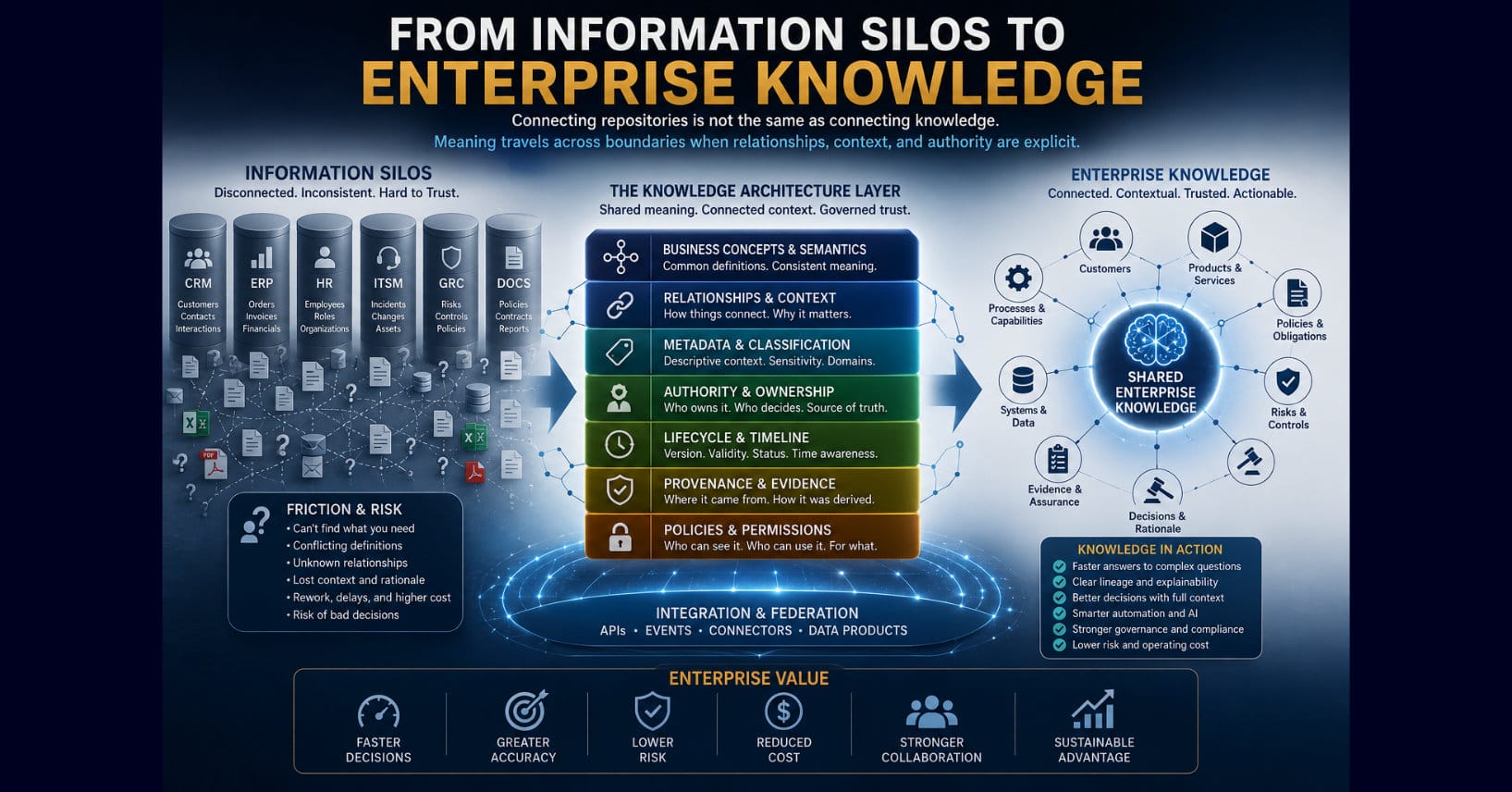
From Information Silos to Enterprise Knowledge
Connecting repositories is not the same as connecting knowledge. Enterprise knowledge emerges when meaning, relationships, authority, provenance, and context can cross system boundaries.
-
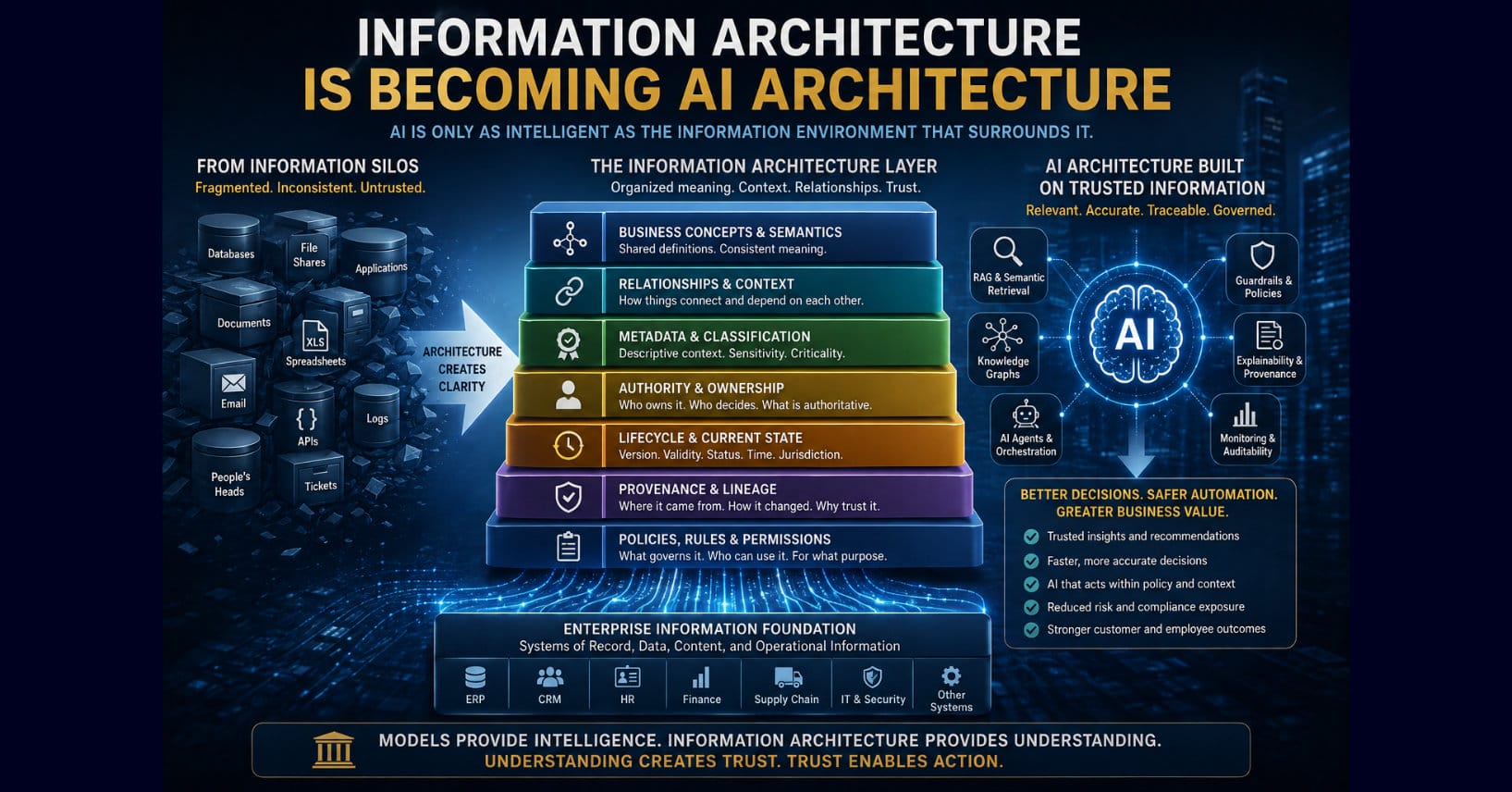
Information Architecture Is Becoming AI Architecture
Enterprise AI is only as intelligent as the information environment surrounding it. Context, authority, provenance, relationships, metadata, and permissions are becoming foundational AI architecture.
-
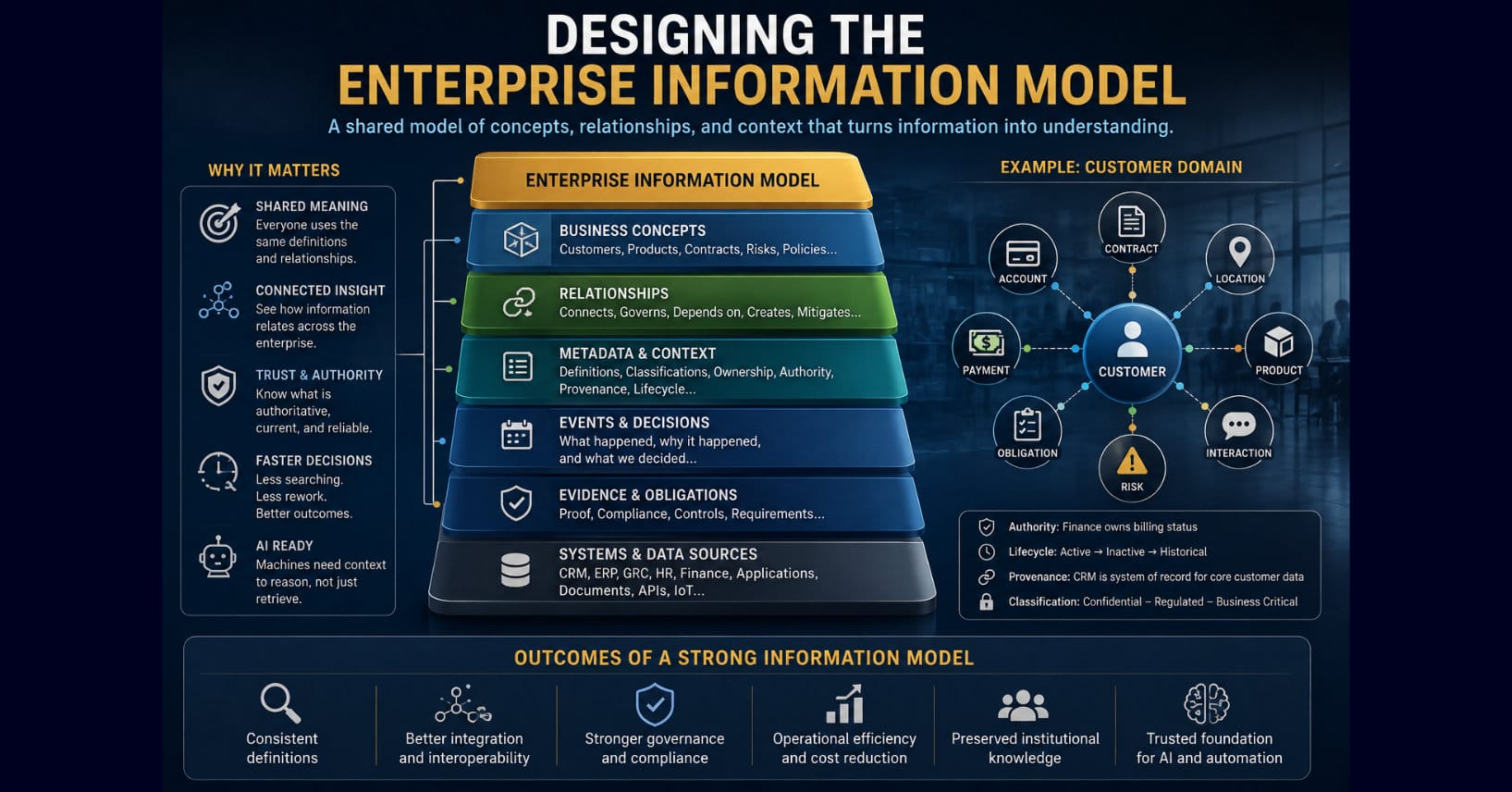
Designing the Enterprise Information Model
An enterprise information model connects business concepts, relationships, metadata, authority, provenance, decisions, and evidence into a shared architecture of meaning.
-
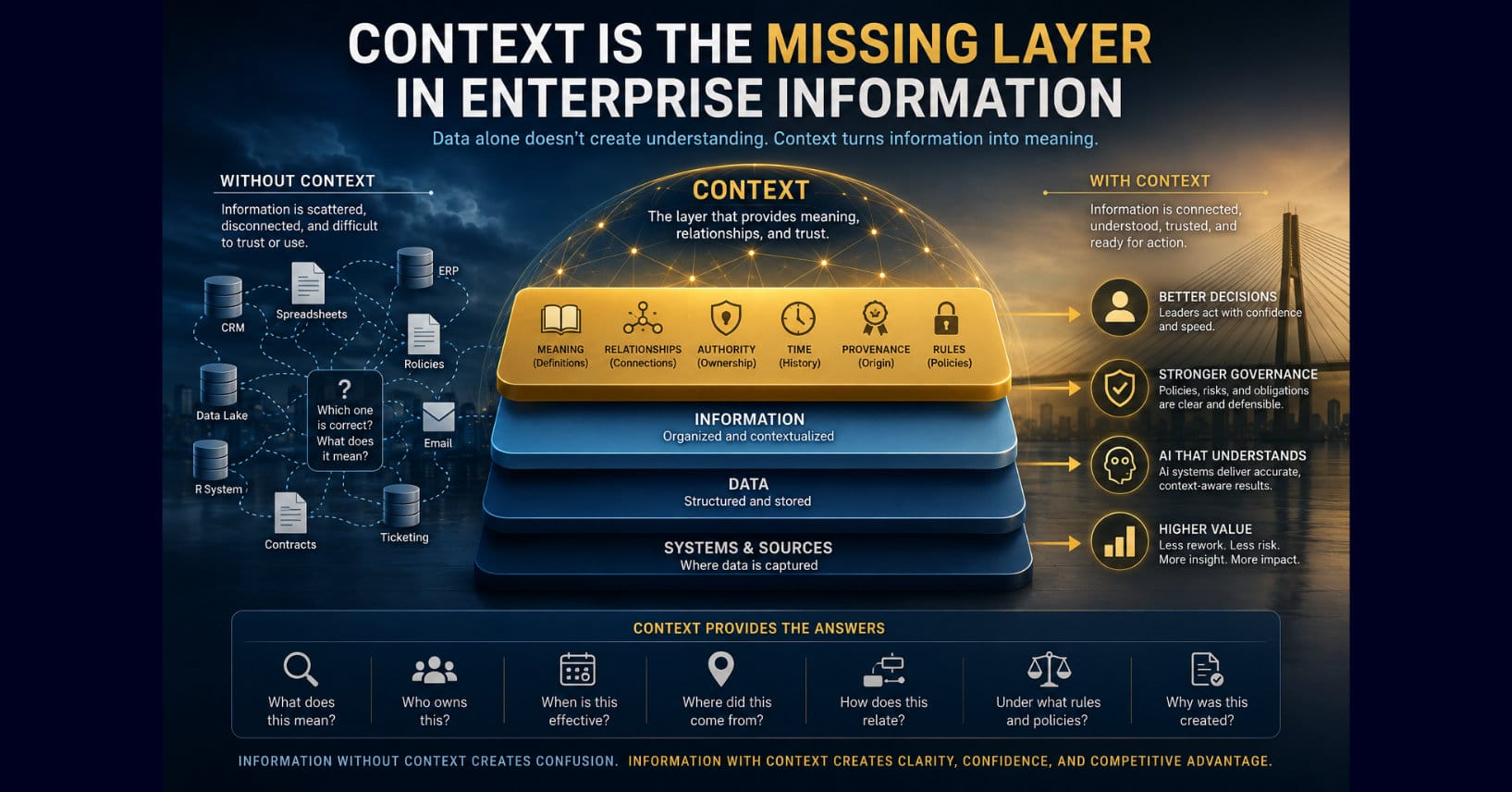
Context Is the Missing Layer in Enterprise Information
Enterprises preserve enormous amounts of data and content but frequently lose the context that makes information meaningful. AI, governance, and decision-making increasingly depend on preserving that missing layer.
-
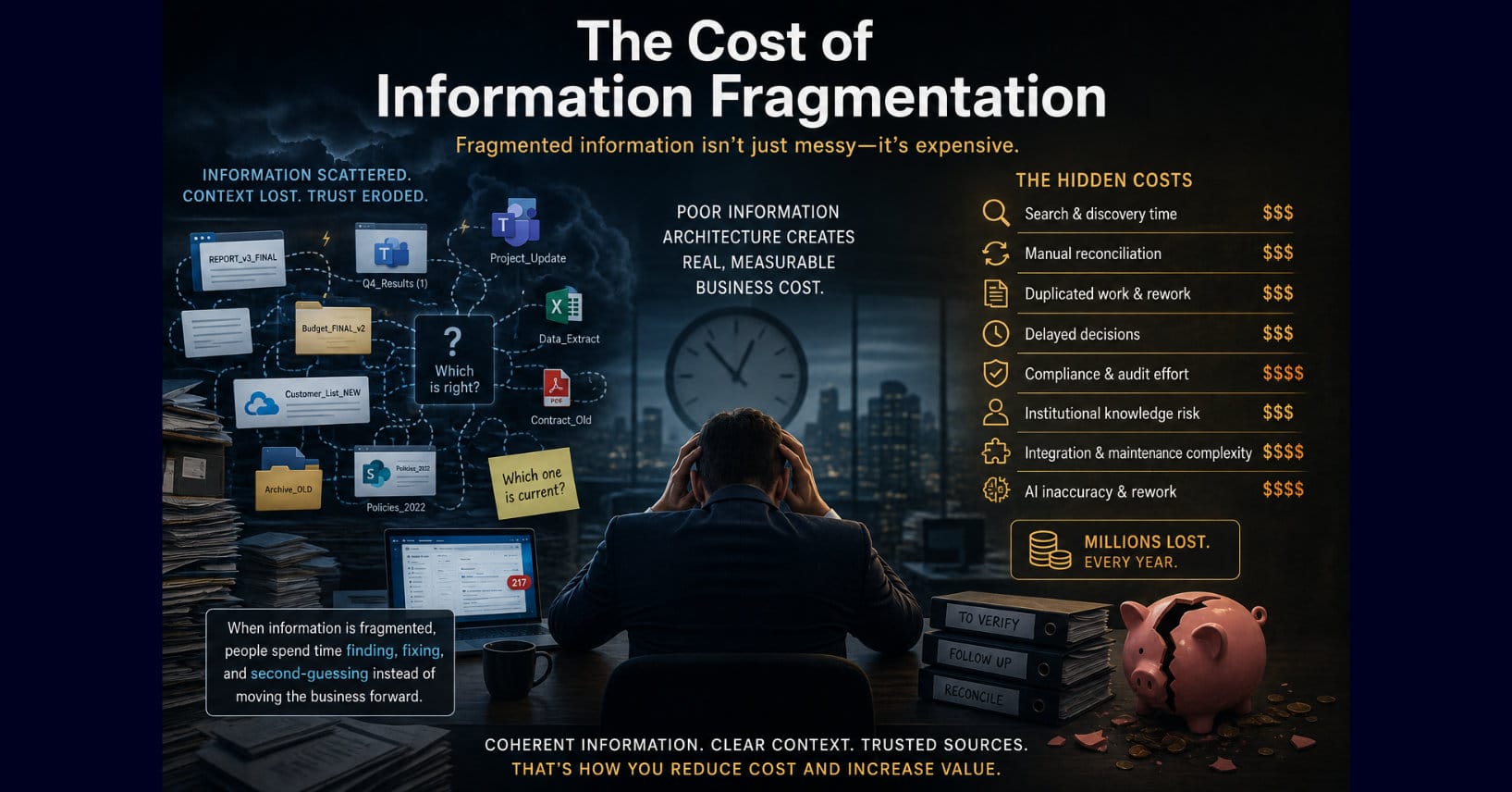
The Cost of Information Fragmentation
Information fragmentation is more than an inconvenience. It creates a persistent enterprise tax through search, reconciliation, duplicated work, slower decisions, compliance effort, integration complexity, and unreliable AI.
-
Your Marketing Team May Be Training Customers to Click Phishing Links
Marketing wants customers to click. Cybersecurity teaches them to hesitate. When legitimate email mimics phishing behavior, the enterprise creates a trust and governance problem.